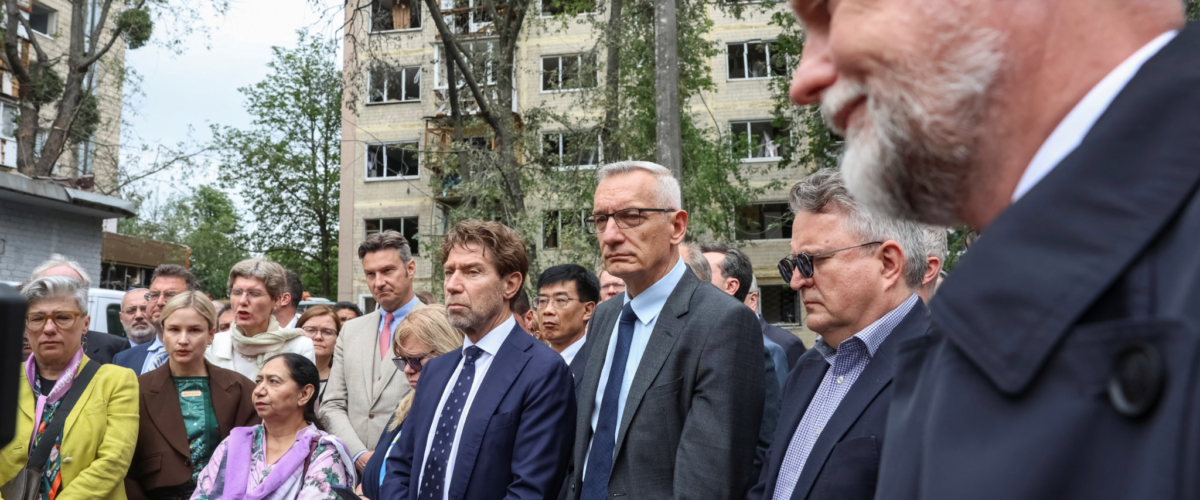
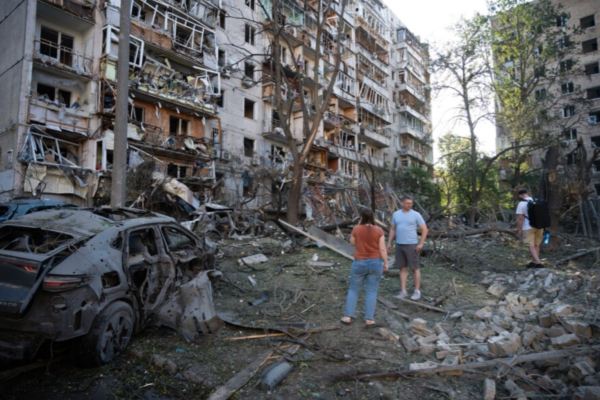
Kyiv observed a day of mourning on 3 July as rescue teams searched for people still missing after the deadliest Russian attack on the Ukrainian capital this year.
At least 30 people were killed and 92 injured,Reuters reported. President Volodymyr Zelensky said 10 people remained missing and the toll could rise. Ukrainian officials said more than 100 residential buildings were damaged.
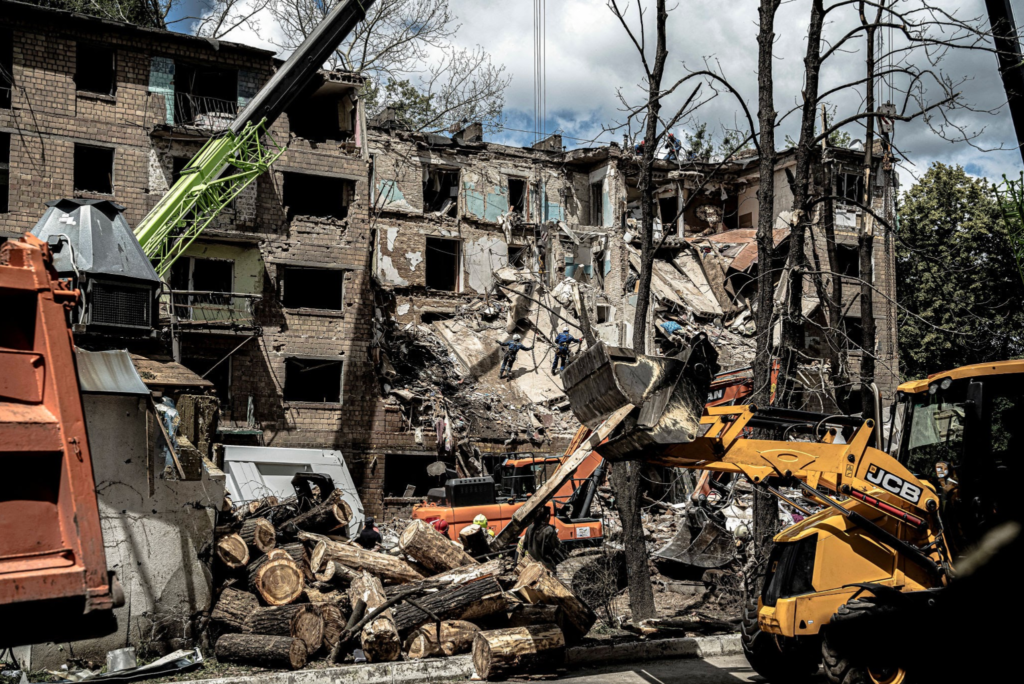
State Emergency Service crews manage heavy machinery to clear compacted rubble from a collapsed residential section in Kyiv. Source: ORI AVIRAM / Middle East Images / AFP via
Ukraine’s Air Force said Russia launched 570 missiles and drones overnight, including 496 Shahed-type drones, four Zircon missiles and 24 Iskander ballistic missiles, according to Euronews. These were not ordinary battlefield weapons: Zircon is a hypersonic anti-ship and land-attack missile, while Iskander is a tactical ballistic missile system capable of carrying conventional or nuclear warheads, according to CSIS Missile Threat. Their use in an attack that damaged homes underscores the scale of force Russia is applying against Ukrainian cities.
The strike sharpened Kyiv’s appeal for faster air-defence deliveries. Zelensky said Russia was relying on ballistic missiles and drone swarms to strike cities and that promised Western systems were still arriving too slowly.
Western support has hardened in financial terms. On 30 June, the European Commission began disbursing €3.9 billion for drone procurement from the EU’s €90 billion Ukraine Support Loan. That followed a separate €3.2 billion macro-financial payment on 25 June.
Diplomatic solidarity was visible in Kyiv, where Ukraine’s Foreign Ministry saidmore than 70 foreign diplomats and international representatives visited the strike site.
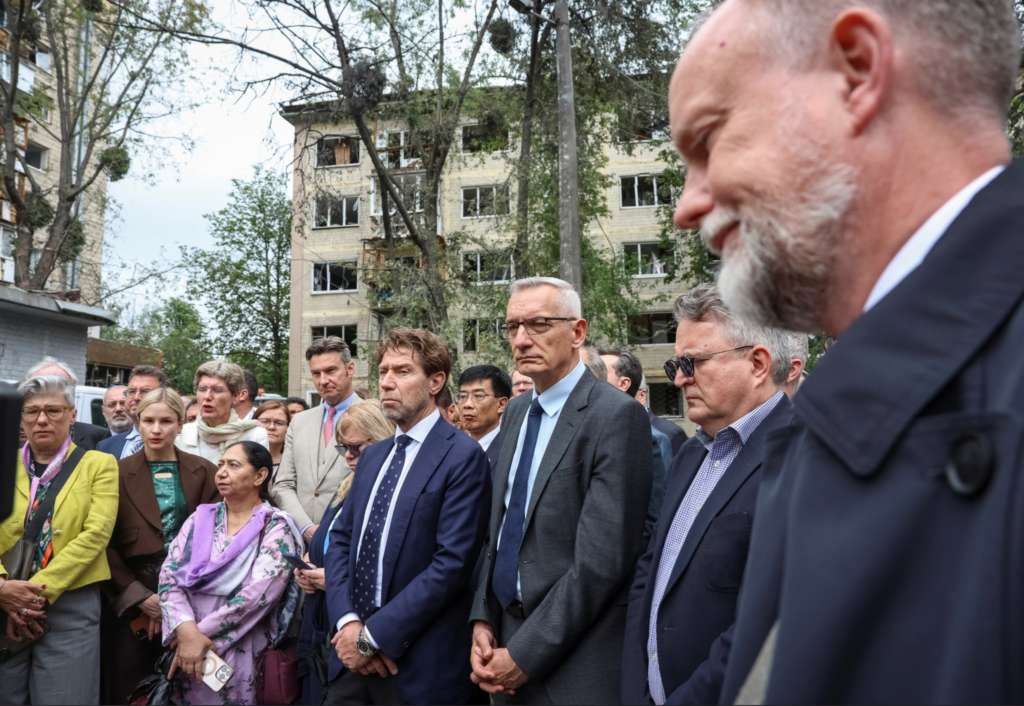
A delegation of over 70 foreign diplomats and international representatives inspects the destruction of civilian housing in Kyiv, demonstrating unified global solidarity. Source: Anatolii Stepanov / REUTERS
The financing and diplomatic response show Western backing moving past statements. But the capability Kyiv says it needs most – enough interceptors to stop ballistic missiles over its cities – remains the unfilled gap.


0 Comments
Leave a Comment