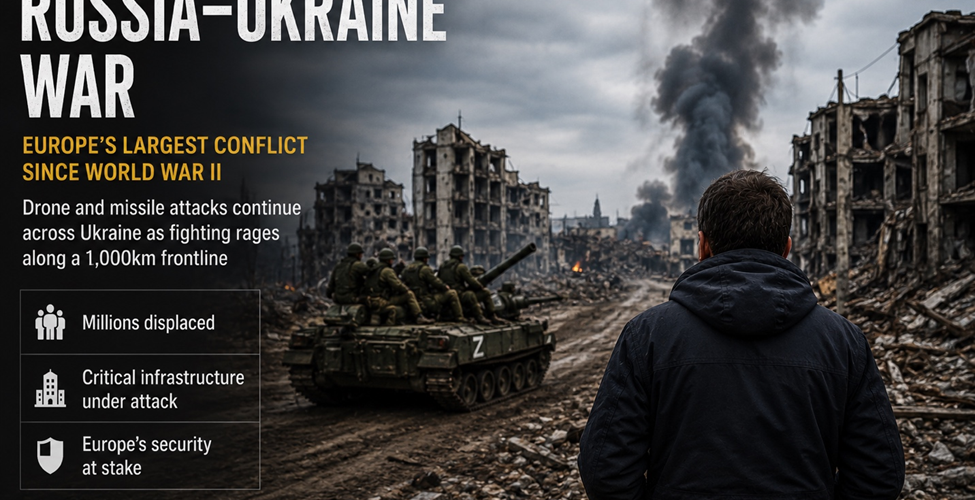
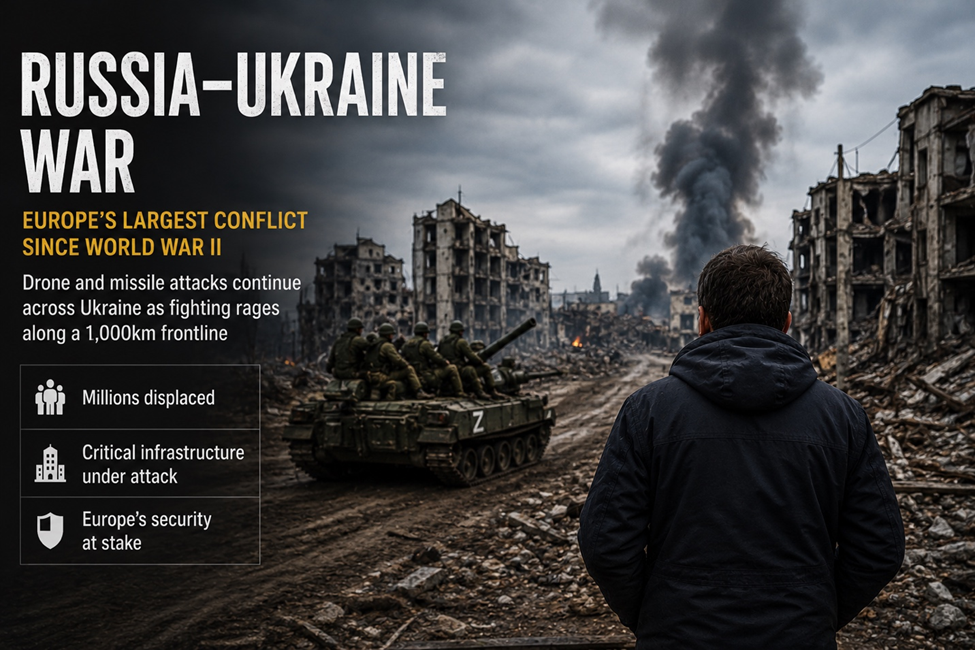
More than four years after Russia launched its unprovoked full scale invasion of Ukraine, Europe’s largest armed conflict since the Second World War continues to reshape the continent’s security landscape. This is a war of aggression: Russia invaded a sovereign neighbour, illegally annexed Ukrainian territory and continues to pursue its conquest, while Ukraine is fighting to defend its land, its people and its right to exist as an independent democratic state.
The United Nations General Assembly has repeatedly condemned the invasion as a violation of the UN Charter and demanded that Russia withdraw its forces. Moscow has refused to abandon its war aims, while Ukraine continues to resist.
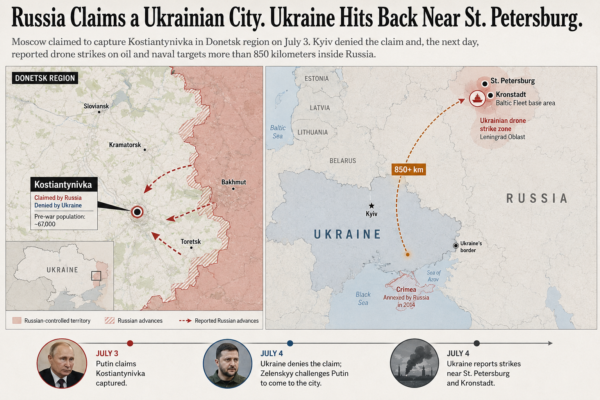
Across eastern and southern Ukraine, intense fighting remains a daily reality as Russian and Ukrainian forces engage in a grinding war of attrition along a frontline stretching hundreds of kilometers. Large scale drone attacks, missile strikes and artillery bombardments have become central features of a conflict that has evolved into one of the most technologically significant wars of the modern era.
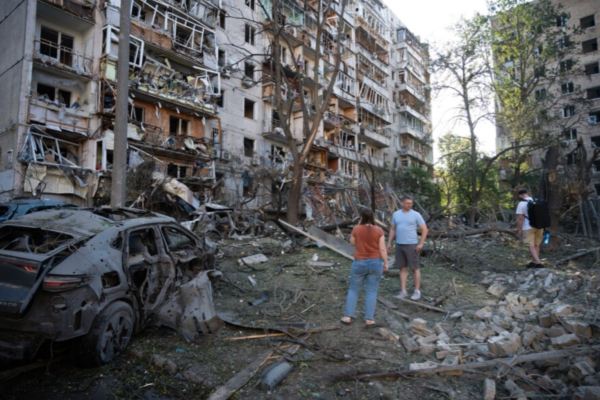
For Ukrainian civilians, the war remains a constant presence. Air raid sirens regularly sound in cities far from the front lines, while critical infrastructure including power facilities, transportation networks and residential areas continues to face the threat of attack.
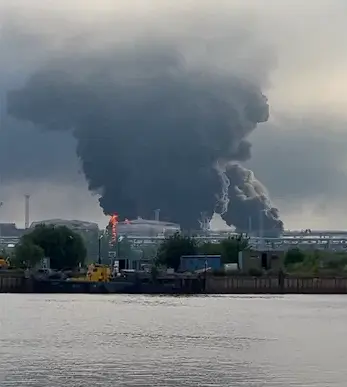
Russia has carried out sustained strikes on Ukraine’s power grid and other civilian infrastructure, attacks that the United Nations and independent monitors have documented as causing widespread civilian harm. Moscow denies deliberately targeting civilians, but the pattern of strikes on residential areas and energy facilities far from the front lines has been extensively recorded.
Despite repeated international diplomatic efforts, a negotiated settlement remains elusive. Kyiv insists that any lasting peace must respect Ukraine’s internationally recognized borders and sovereignty. Ukrainian officials argue that rewarding territorial gains achieved through military force would undermine international law and encourage future aggression elsewhere.
European governments have largely remained united in their support for Ukraine, viewing the conflict not only as a struggle for Ukrainian independence but also as a defining challenge to the post Cold War security order in Europe.
Across European capitals, policymakers increasingly describe the war as a test of the continent’s ability to defend democratic institutions, national sovereignty and territorial integrity. Military aid, economic assistance and sanctions against Russia have become key elements of that strategy.
At the same time, the conflict has imposed significant economic and political pressures across Europe. Rising defense spending, energy security concerns and the long term costs of supporting Ukraine continue to shape political debates throughout the region.
Military analysts note that both Russia and Ukraine have adapted their battlefield strategies, making extensive use of drones for reconnaissance and attacks. The rapid evolution of drone warfare has transformed combat operations and attracted close attention from armed forces around the world.
Humanitarian organizations continue to express concern over civilian casualties and displacement. Millions of Ukrainians remain displaced either within the country or abroad, while reconstruction costs are expected to reach hundreds of billions of dollars.
For many Ukrainians, however, the conflict is about more than territory. It is increasingly viewed as a struggle for national survival, identity and the right to determine the country’s future free from external coercion.
As another year of war unfolds, hopes for a breakthrough remain uncertain. What is clear is that the conflict continues to influence global security, international diplomacy and the future direction of Europe itself.
With the battlefield largely deadlocked and diplomatic channels producing limited progress, the war appears set to remain one of the defining geopolitical challenges of the twenty first century.

0 Comments
Leave a Comment