3 July 2026
Western sanctions regimes are built to count things: shipping containers, drone components, dual-use semiconductors crossing a border. A Reuters investigation published on 1 July suggests that some of the least visible – but potentially most strategically significant – transfers between Russia and China leave no such trail. They travel as instruction, delivered classroom to classroom, and they are harder to sanction because they are harder to see.
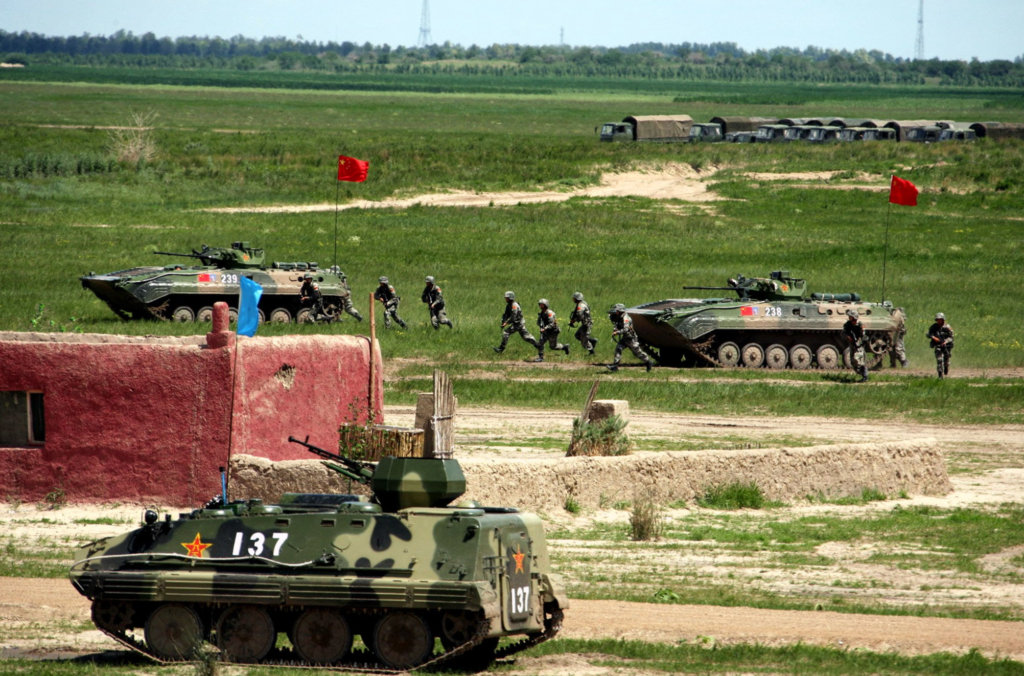
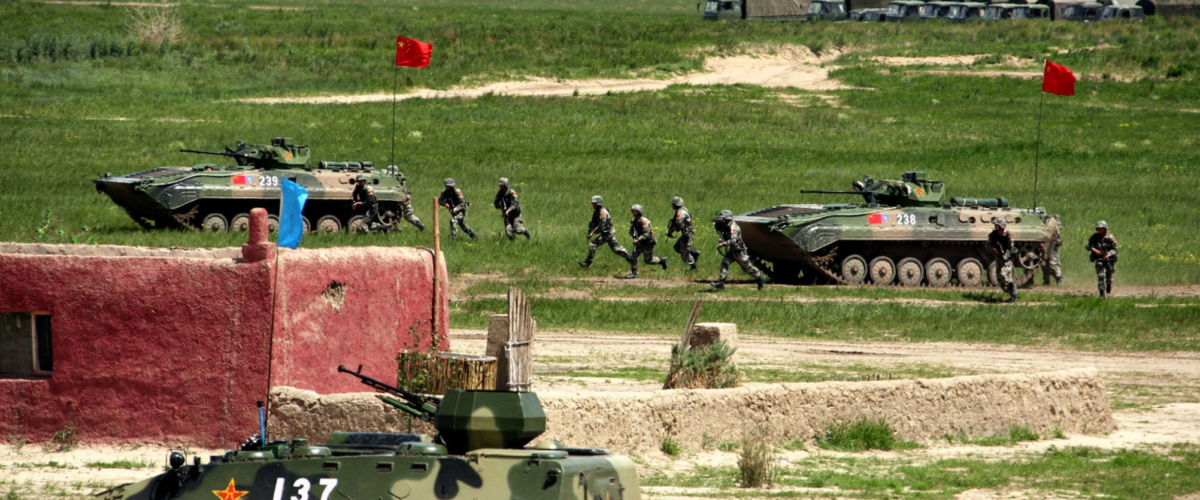
PLA conventional forces conducting structural maneuvering and operational field exercises.. Source: VCG / Visual China Group via Getty Images
According to two European officials and classified documents reviewed by Reuters, Russian Defence Minister Andrei Belousov personally authorized covert military training with China under an internal decree issued in August 2025. The Russian delegation was led by Colonel General Rustam Muradov, deputy commander-in-chief of Russia’s land forces. A three-week course on radiological, chemical and biological (RCB) defence, held at a Beijing facility in November, was opened by Chinese Major General Li Jinsun, head of the People’s Liberation Army’s Military Academy of Radiological, Chemical and Biological Defense. Russian Major General Vitaly Gerasimov attended a separate course in the city of Bengbu. The framework agreement underpinning the exchange was signed in Beijing on 2 July 2025 by Russian Major General Rustam Khusainov and Chinese Senior Colonel Sun Dayun, covering training at facilities in both Beijing and Nanjing.
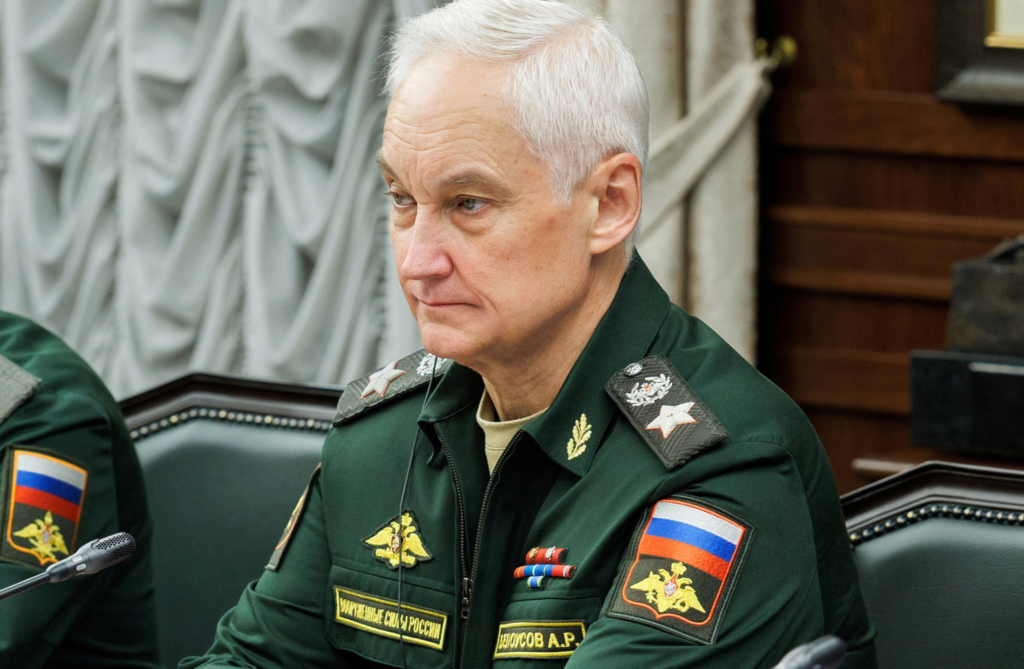
Russian Defence Minister Andrei Belousov, Source: REUTERS
China’s Foreign Ministry described the Reuters reporting as “entirely unfounded,” while Andrei Kartapolov, chairman of the Russian parliament’s defence committee, dismissed it as “complete nonsense.” Those competing claims have not been independently resolved.
The specificity of the reported programme is what makes it noteworthy. Photographs described in the documents reportedly show Russian personnel studying a model nuclear reactor and receiving instruction in chemical reconnaissance, radiation reconnaissance and methods for protecting ventilation systems from contamination. The reported curriculum focused on operations in contaminated environments and improving military survivability under radiological or chemical hazards. That represents a narrower – and potentially more consequential – transfer than the drone and electronic-warfare instruction reported by Reuters in May, when roughly 200 Russian servicemen were said to have trained in China before some later returned to combat in Ukraine.
The distinction between hardware and doctrine is the one Beijing’s public position tends to obscure. China has repeatedly denied providing lethal military assistance to Russia, a claim directed at a specific category of support: weapons and munitions that can be photographed, tracked and counted. Military doctrine does not fit that framework. A course on protecting critical infrastructure from radiological contamination or organising counter-drone electronic warfare generates no shipment to intercept and no customs declaration to examine. Yet it can still expand what a military is capable of surviving, sustaining and executing. Judged solely against the benchmark of “no lethal aid,” such cooperation may appear compliant. Judged by its potential operational effect, it represents a transfer of military capability through knowledge rather than equipment.
Modern militaries also learn through institutions as much as through combat. Tactical innovations become doctrine only after they are absorbed into military academies, staff colleges and specialist training centres, where they shape future officers, planners and instructors. If Reuters’ reporting is accurate, the significance lies not simply in Russian officers attending courses in China, but in battlefield experience from Ukraine entering formal educational structures where it can influence military thinking long after individual participants leave the classroom. Institutional learning often produces effects that outlast any single weapons system or joint exercise.
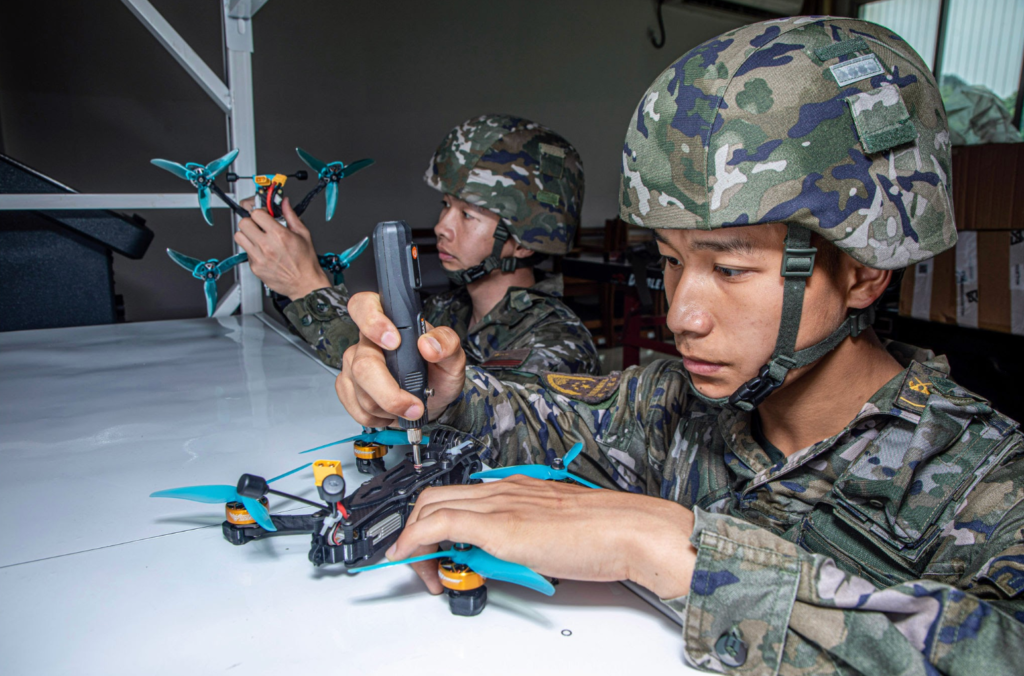
PLA operators undergoing specialized assembly and drone platform modification training.. Source: Future Publishing / Future Publishing via Getty Images
The relationship also appears to run in both directions. Internal Russian assessments described by Reuters praised Chinese equipment, simulators and instructors’ theoretical expertise while noting that the People’s Liberation Army has not fought a major war in decades. Russia, by contrast, has accumulated more than four years of continuous combat experience in Ukraine – experience that China lacks. Rather than one military instructing the other, the reported exchange increasingly resembles a deliberate pairing of Chinese technological infrastructure with Russian battlefield experience.
That exchange has implications well beyond Europe.
The reported curriculum – covering RCB defence, drone and counter-drone operations and electronic warfare – aligns closely with the operational demands of fighting in contested urban and industrial environments rather than open-field manoeuvre warfare. Although Reuters’ reporting does not link the programme to any specific operational plan, the curriculum corresponds to capabilities that would also be relevant in a high-intensity conflict involving dense urban areas, critical infrastructure and persistent drone surveillance, including a potential Taiwan contingency. Whether Beijing is deliberately incorporating Russian lessons into planning for such a scenario remains unproven, but the overlap is likely to attract close scrutiny from U.S. and allied defence planners.
For NATO, the implications extend beyond technology transfer. Combat experience is increasingly becoming a strategic resource in its own right. If Russian officers are translating lessons from Ukraine into Chinese military institutions – and if Chinese officers are studying both Russian successes and failures – the partnership becomes a mechanism for accelerating military adaptation across two theatres simultaneously. Instead of transferring hardware alone, Moscow and Beijing may also be exchanging operational habits, doctrinal approaches and institutional knowledge that could influence future conflicts in both Europe and the Indo-Pacific.
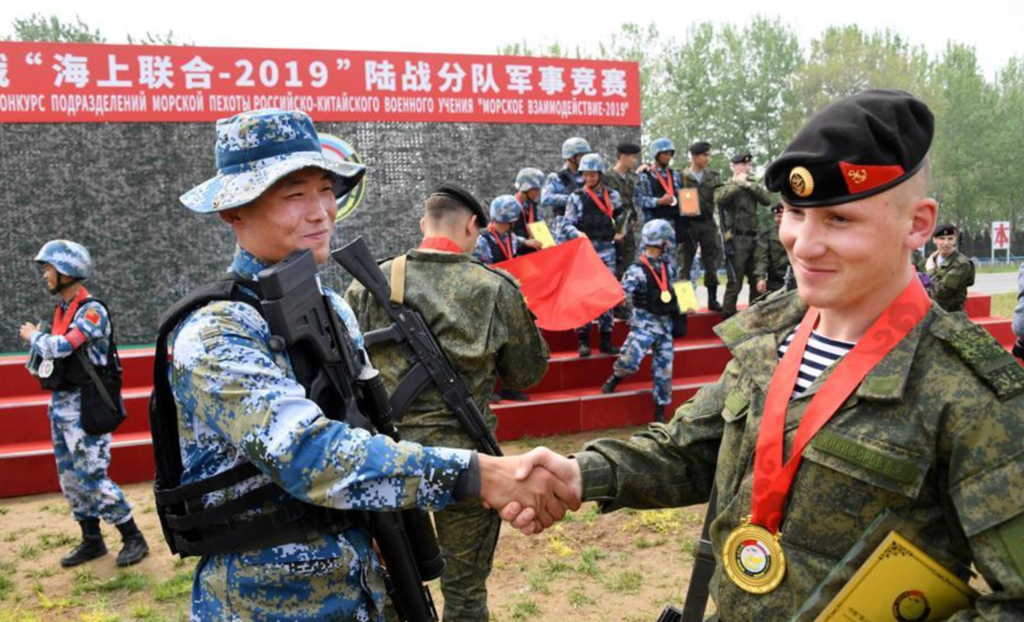
Russian and Chinese tactical personnel during a public bilateral exchange program.. Source: www.xinhuanet.com
Reuters also reported that EU foreign policy chief Kaja Kallas said on 15 June that Brussels had independently confirmed the training had taken place and was assessing its implications. Beijing rejected her comments as “nothing but smears.” The debate within Europe is therefore shifting from whether military cooperation exists to how significant it has become, and whether existing sanctions and export-control mechanisms adequately address transfers of knowledge rather than technology.
Several important limits deserve equal attention. The reporting does not describe a formal military alliance comparable to NATO, nor does it demonstrate that China has abandoned its publicly stated neutrality regarding the war in Ukraine. The full scope, duration and objectives of the reported programme remain unknown. Moreover, Reuters’ account relies on classified documents and anonymous European officials rather than public confirmation from Moscow, Beijing or the officers identified in the documents. Those gaps leave important questions unanswered, including how extensive the exchanges have become and whether they are likely to continue expanding.
What the documented cases do establish is a shift in how Russia-China military cooperation should be understood and monitored. Systems designed to intercept shipments, identify sanctioned components or track dual-use exports are poorly equipped to detect a training roster, a specialist curriculum or a lecture on reactor containment. If operational knowledge is now moving between Moscow and Beijing as readily as hardware once did, then many of the institutions built to monitor the partnership are measuring only part of what is changing.
Whether the reported programme ultimately proves extensive or relatively limited, Reuters’ investigation suggests that military knowledge itself has become a strategic commodity. As the war in Ukraine continues to reshape modern warfare, the most valuable export between authoritarian partners may no longer be a missile, a drone or a microchip, but the experience of how to fight – and survive – on a battlefield defined by constant surveillance, electronic warfare and relentless adaptation


0 Comments
Leave a Comment