3 July 2026
A bomb tore through a crowded café near Damascus’s Palace of Justice on Thursday, killing at least nine people and wounding 20, in an attack that struck the courthouse where Syria’s transitional government is prosecuting some of the former regime’s most notorious figures.
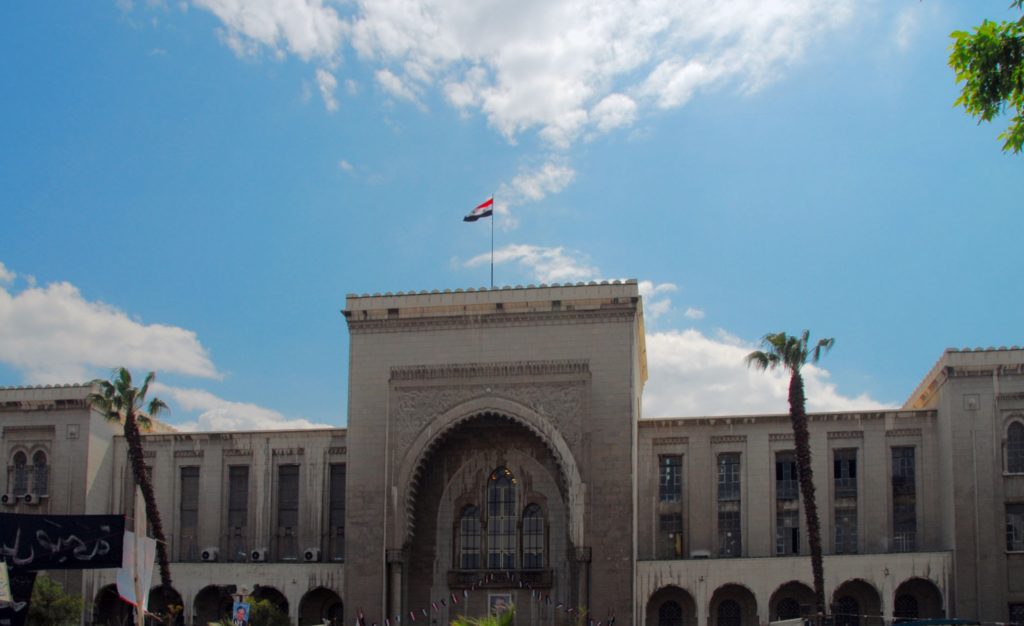
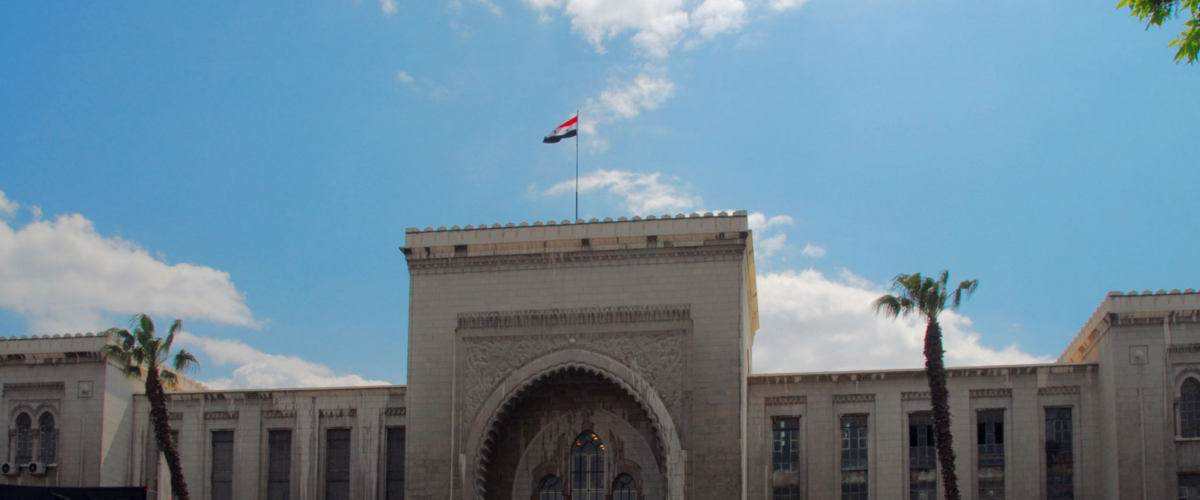
The Palace of Justice in Damascus, the central judicial site targeted by proxy in the July 2026 bombing.. Source: mtcurado / Getty Images
The blast hit a café on al-Nasr Street in the al-Hijaz district, about 100 meters from the courthouse entrance, according to Syria’s Interior Ministry, which said the device weighed roughly one kilogram and was packed with metal shrapnel. Security sources told Al Jazeera that a person entered the café, placed the device under a table and left before the detonation, suggesting a deliberate, pre-planned attack.
The timing is difficult to separate from what was happening inside the building itself. This week, the Palace of Justice has been hearing the case against Atef Najib, the former security chief accused of torturing schoolboys in Deraa in 2011 – the episode widely credited with igniting the uprising against Bashar al-Assad. Syria’s former grand mufti, Ahmad Badreddin Hassoun, and militia commander Wassim al-Assad have also recently stood trial there. The café was busy in part because of the proceedings, attracting lawyers, courthouse staff and visitors.
No group claimed responsibility. Damascus Governor Maher Marwan said “bad actors” were attempting to destabilize the country and vowed that “those who shed the blood of Syrians will pay.” Osama Atika, commander of Internal Security in Damascus, arrived shortly after the explosion to oversee the investigation. Reuters reported that Syrian officials suspect Islamic State involvement, citing concerns the group is attempting to reactivate sleeper cells to disrupt the country’s political transition. That assessment has not been independently confirmed and was not repeated by officials speaking at the scene.
The attack also raises questions about how an explosive device was planted so close to one of the capital’s most sensitive government sites. Reaching a table inside a busy café near the courthouse without attracting attention highlights the challenge of securing even heavily monitored government districts against covert attacks. One Syria analyst, Kamal Abdo, has estimated that thousands of former Baath Party officials, intelligence officers and militia members linked to the previous security apparatus remain inside Syria. The estimate has not been independently verified, but it illustrates the scale of the transitional government’s acknowledged vetting and security challenge.
Thursday’s bombing is the third major attack on Damascus since Assad’s fall in December 2024, and each has targeted a different pillar of the state Syria’s new authorities are trying to rebuild. The Mar Elias church bombing in June 2025, claimed by a Sunni extremist group and blamed by authorities on Islamic State, killed 25 people and was widely seen as an attempt to inflame sectarian tensions. A car bomb outside the Defense Ministry in the Bab Sharqi district on 19 May killed one soldier and wounded at least 18, targeting the security establishment. Thursday’s attack, by contrast, struck the judicial process itself – the mechanism through which the transitional government is seeking to demonstrate that accountability, rather than revenge, will define the post-Assad order.
Whether the perpetrators were extremist militants, remnants of the former regime or another actor, the bombing illustrates the central challenge facing Syria’s transitional authorities: protecting the institutions meant to deliver justice while rebuilding public confidence in the state’s ability to provide security. The attack serves as a reminder that although the Assad era has ended, Syria’s struggle to establish a stable and accountable post-war order remains far from complete.


0 Comments
Leave a Comment